Forty Days to Greatness
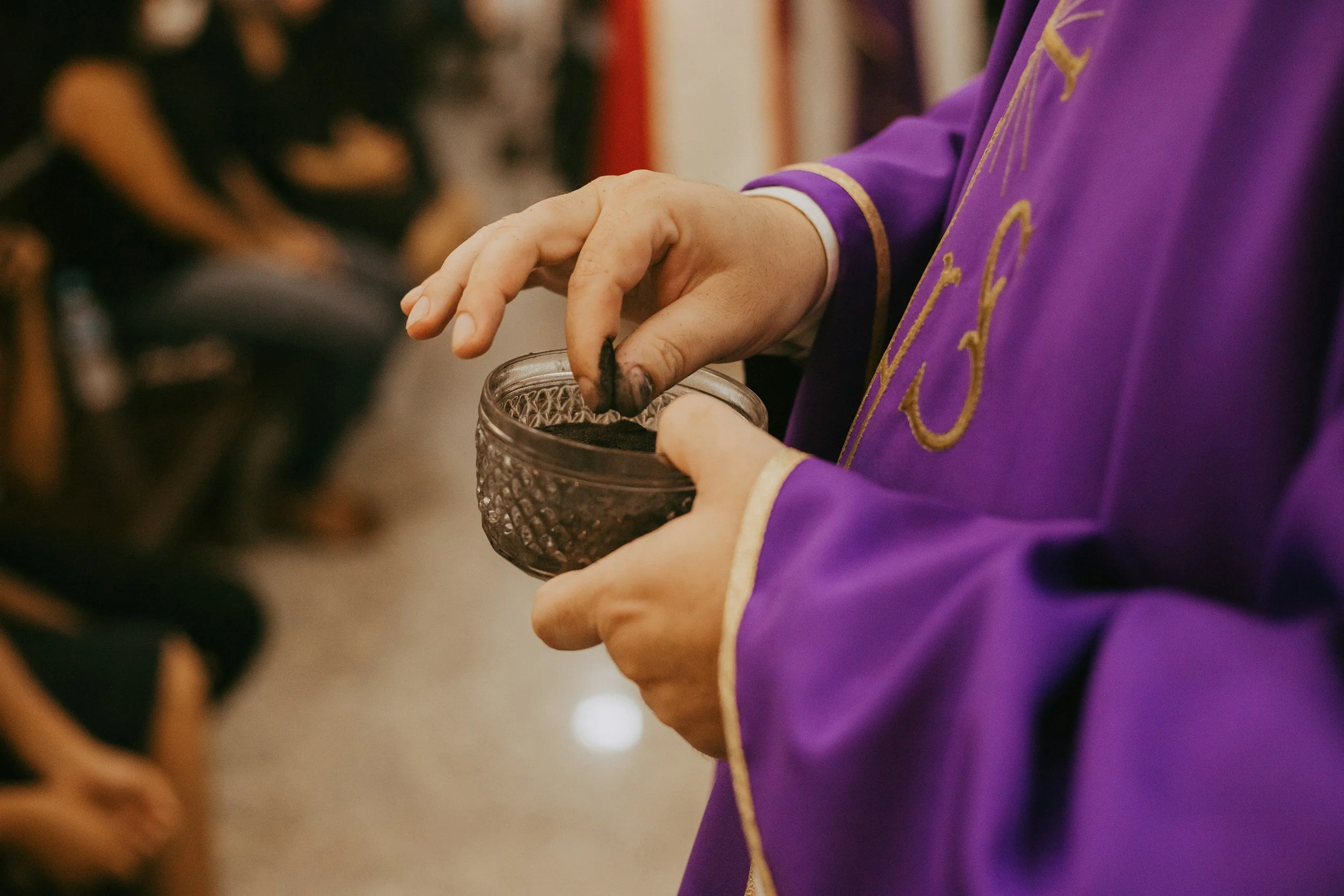
I have a love-hate relationship with Lent. Each year, I dread its coming, yet by the end of the season, I am renewed. The truth is, I know I need it. I know I rely on the world, material things, and comforts more than I should. Pope Benedict XVI said, “the world offers you comfort, but you were not made for comfort. You were made for greatness.” The only way to obtain the greatness for which we were made is by total reliance on God. Lent is necessary in order for me to decrease so that God can increase in my life.
What is Lent?
Lent is considered a season of penance in the liturgical year of the Church when Christians are encouraged to practice spiritual exercises, “voluntary self-denial such as fasting and almsgiving, and fraternal sharing” (CCC 1438). When Jesus was tempted by Satan in the desert, He took on the Temptor for us: “For we have not a high priest who is unable to sympathize with our weakness, but one who in every respect has been tested as we are, yet without sinning” (CCC 540, Hebrews 4:15). The 40-days of Lent unite us with Jesus in the desert. Jesus’ Temptation in the desert can be found in Matthew 4:1-11 and Luke 4:1-13.
Lent is a season of prayer, fasting, and almsgiving which begins on Ash Wednesday and ends at sundown on Holy Thursday. Lent is meant to serve as a time of transforming our hearts to be more like Christ and prepare the faithful to celebrate His Resurrection at Easter.
The Catechism teaches that the practices of Lent are included in the fourth precept of the Church: “You shall observe the days of fasting and abstinence established by the Church.” These practices allow us to practice mastery over our actions which ultimately leads to greater freedom to love more perfectly like Christ.
Biblical Roots of Lent
The practice of fasting can be found in Scripture as far back as the time of Moses. “Moses was there with the Lord for forty days and forty nights, without eating any food or drinking any water, and he wrote on the tablets the words of the covenant, the ten words” (Exodus 34:28).
Abstinence from food and devotion to prayer and penance is rooted in Yom Kippur, a Jewish Day of Atonement celebrated each year, The explanation of this practice is found in Leviticus 16.
Ashes were used as a sign of repentance and mourning in several places in Scripture including the Books Job 42:6, Jonah, Daniel 9:3, 1 Maccabees 3:47, and my favorite, Esther 14:1-3. Of course, in Genesis, Adam is described as being made from the dust of the ground (Genesis 2:7) and told by God after committing the first sin, “You are dust and to dust you shall return” (Genesis 3:19).
The practice of Ash Wednesday was adopted from the Jewish tradition by the Church in the 11th century. During the distribution of ashes (in the shape of a cross) on Ash Wednesday, the minister will say either, “Remember you are dust, and to dust you shall return,” or “Repent and believe in the Gospel.” These are meant to serve as reminders of the need for the purification of the heart because of our mortality.
Participating in Lent
The basic expectations of Lent are that we “seek the Lord in prayer by reading Sacred Scripture; we serve by giving alms; and we practice self-control through fasting” (usccb.org/prayer-worship/liturical-year/lent). This is meant to serve as a way for the faithful to transform our hearts to be more like Christ.
In addition, we are called to abstain from meat on Fridays (Catholics age 14 and up) and fast on Ash Wednesday and Good Friday (Catholics ages 18-59). Abstaining from meat on Fridays reminds us of the sacrifice of Jesus when He died on Good Friday. Meat was considered a luxury and symbol of celebration. Fasting is a practice of self-discipline by limiting food intake and how many meals are eaten in a day. The fasting rules on Ash Wednesday and Good Friday allow Catholics to eat only one full meal and two smaller meals which, combined, would not equal a single normal meal. Meat is also not allowed on fasting days (hallow.com/blog/lent-fasting-rules/).
Pray, Fast, Give
The three pillars of Lent are prayer, fasting, and almsgiving. As Lent approaches, I encourage you to pray about where God is calling you to grow in these ways. Avoid falling into the trap of “giving up chocolate” unless that is truly going to help you focus on the true meaning of Lent. In his first Lenten message, Pope Leo wrote that Lent is a time to “place the mystery of God back in the center of our lives, in order to find renewal in our faith and keep our hearts from being consumed by the anxieties and distractions of daily life.”
The challenge is to fast from things that distract us from our relationship with God, our family, or doing God’s work. This may look like:
Giving up or limiting social media during family time
Limiting or stopping hitting the snooze button to avoid procrastination and laziness.
Leaving your airpods at home during the school/work day, so you can engage in conversations with friends
Limiting or avoiding wearing makeup to appreciate the natural beauty God has given you
Sleeping without a pillow and offering up your discomfort for the homeless
Beyond fasting from distractions, we are also called to dive deeper into prayer during the season of Lent. Our prayer should unite us with Christ in the desert. For this reason, a prayer routine rooted in Scripture is ideal for the season of Lent. Here are some prayer ideas to add for Lent:
Read and reflect on the daily Gospels
Pray the rosary daily or weekly
Attend daily Mass once during the week
Spend time in Eucharistic Adoration for at least 30-minutes a week
Attend the Stations of the Cross on Fridays
Commit to going to Confession during Lent (at least once!)
In order to deepen our commitment to building God’s kingdom on earth, almsgiving during Lent is just as important as fasting and prayer. Almsgiving can be a powerful way to transform our hearts because it helps us break away from selfishness. Almsgiving can be in the form of service or donation of time or talents:
Choose a charity and donate as a family
Spend time volunteering at the parish as a family
Collect your change during Lent and donate it to a charity at the end of Lent
Identify clothes, shoes, accessories that are in good/used condition and donate them to Christian charity, like Homes of Grace
Donate babysitting, tutoring, or other service for free
Made for Greatness
While I begin Lent dreading being uncomfortable, when I enter in fully, I soon find myself more at peace. Holiness is a journey, and Lent is necessary to help us stop relying on the things of the world and depend on God more. We are made for so much more. We are made for a profound, divine purpose. That is the greatness to which Pope Benedict XVI was referring. The things of this world will never truly satisfy and will only prepare us for mediocrity. Greatness means becoming who you were created to be, living like Christ, and being totally obedient to God. For the next forty days, keep your eyes fixed on God. He is doing something great in you!